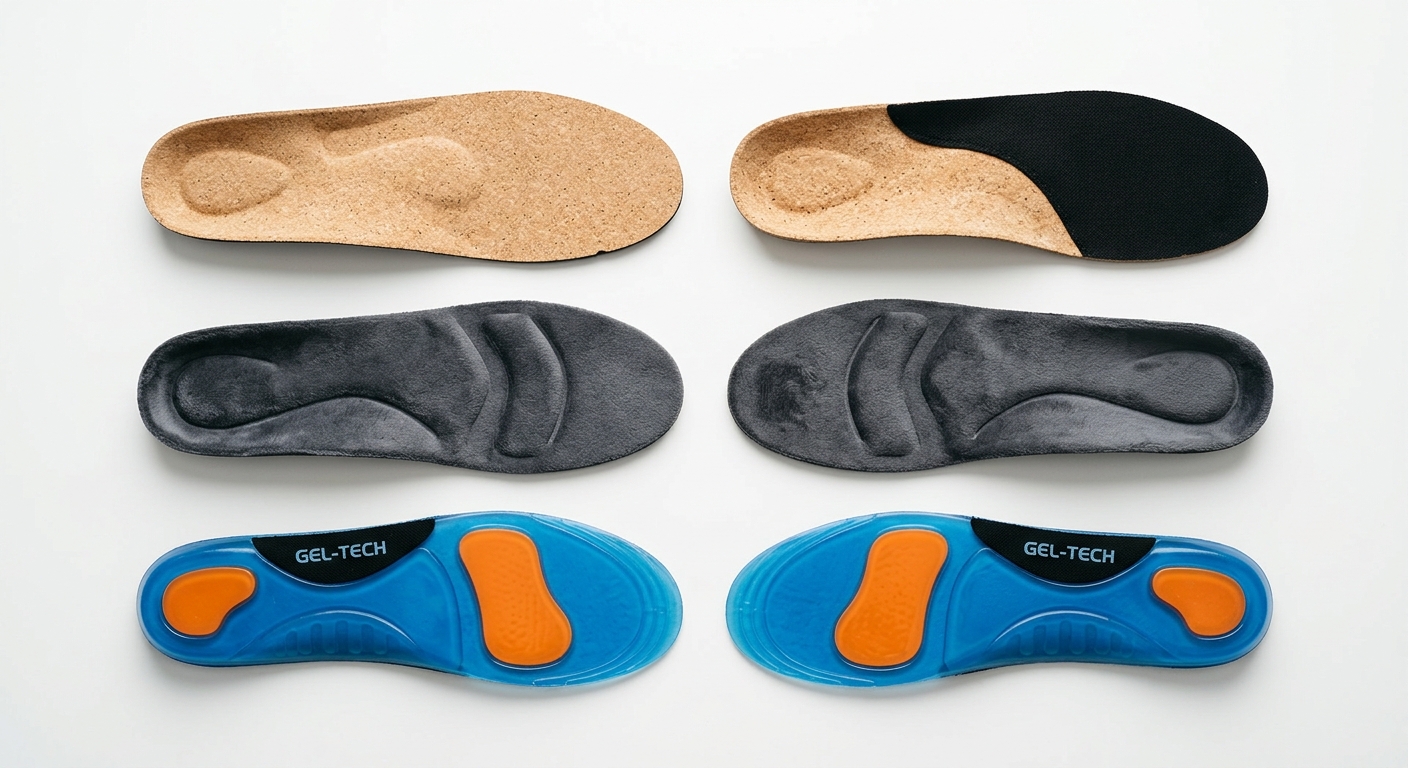
Foot pain affects nearly 80% of adults at some point. Whether it's plantar fasciitis, flat feet, or general fatigue from standing all day, the right insole can make a dramatic difference. But with so many options — memory foam, gel, cork, medical-grade orthotics — how do you choose?
Understand Your Foot Type
Before buying insoles, it helps to know your foot type:
- High arches — You need cushioning and shock absorption. Look for gel or memory foam insoles with arch support.
- Flat feet / low arches — You need structured support to prevent overpronation. Firm orthotic insoles work best.
- Neutral arches — A balance of cushioning and support. Most insole types will work for you.
Memory Foam vs Gel vs Cork
Memory Foam
Memory foam insoles conform to your foot shape, providing customized cushioning. They're ideal for people who stand or walk for long hours. The downside is they compress over time and typically need replacing every 6–12 months.
Gel Insoles
Gel insoles excel at shock absorption. They're the best choice for high-impact activities like running or court sports. Gel doesn't compress like foam, so it maintains its cushioning longer. However, gel alone doesn't provide arch support — look for gel insoles with a built-in arch.
Cork
Cork insoles offer firm support and mold to your foot over time. They're natural, breathable, and durable. Cork is the preferred material for dress shoes where bulk is a concern. The trade-off is less cushioning compared to foam or gel.
Medical-Grade Orthotic Insoles
If you have specific conditions — plantar fasciitis, metatarsalgia, or severe overpronation — medical-grade orthotic insoles are worth the investment. These feature structured arch support, deep heel cups, and metatarsal pads. They cost more than standard insoles but address specific biomechanical issues.
Custom orthotics from a podiatrist cost $300–$600. Quality over-the-counter orthotic insoles cost $25–$50 and address 80% of common foot issues. Start with OTC options before going custom.
Sizing and Trimming
Most insoles come in size ranges (e.g., Men's 8–13) and can be trimmed to fit. Here's the process:
- Remove the existing insole from your shoe (if removable).
- Place it on top of your new insole as a template.
- Trace around it with a pen.
- Trim along the line with sharp scissors.
- Insert and test the fit — it should lie flat without bunching.
Always trim less than you think you need. You can always cut more, but you can't add material back.
When to Replace Your Insoles
Even the best insoles wear out. Signs it's time to replace:
- Visible compression in the heel or arch area
- Your feet start hurting again after periods of standing
- The insole smells even after cleaning
- Cracks or tears in the material
As a general rule: replace foam insoles every 6–12 months, gel every 12–18 months, and cork every 18–24 months with proper care.
Our Recommendation
For most people, a memory foam orthotic insole with arch support is the best starting point. It combines cushioning with structural support and works in everything from sneakers to work boots. If you have specific foot conditions, step up to a medical-grade option.